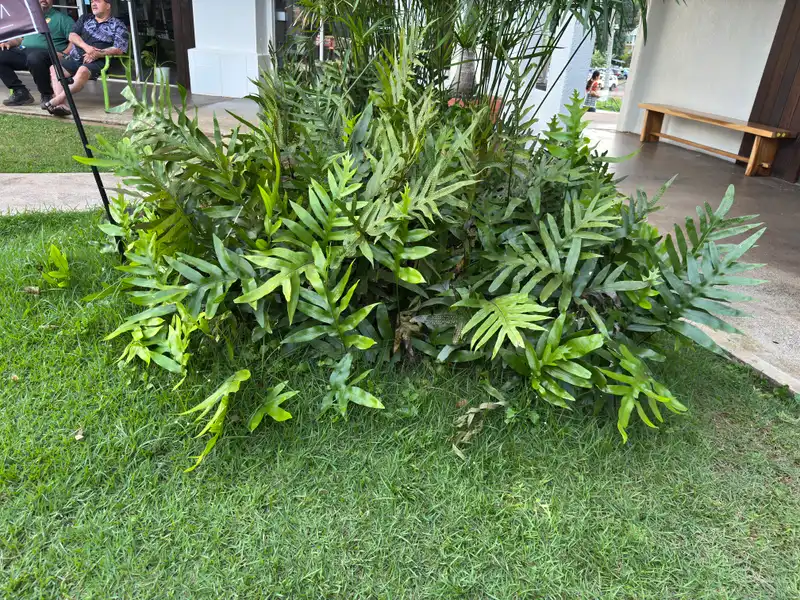
Wart Fern
Microsorum scolopendria
Wart fern is a tropical, rhizomatous fern with leathery green fronds and distinctive raised sori. It grows in shade as a groundcover, container plant, or epiphyte, and its creeping rhizomes can spread widely.
- Plant Type
- Perennials & Annuals
- Width
- 12–24 In.
- Height
- 12–24 In.
- USDA hardiness zone
- 10 - 11
- Sun requirements
- Part Shade, Full Shade
- Water requirements
- Medium
- Design image count
- 7
Design images (7)


Bring your vision to life
The design images above are drag-and-drop ready — place this plant on a photo of your own yard and see it before you plant it.
Create design onlineAbout Wart Fern
Wart fern is a tropical, evergreen fern with deeply lobed, leathery fronds and long, creeping rhizomes. It grows on the ground, rocks, or tree trunks and can spread into a dense patch in warm, humid conditions.
## Identification
Kew accepts *Microsorum scolopendria* and lists *Phymatosorus scolopendria* among its synonyms; some fern references use the latter genus. Its rounded sori sit beneath the fronds and create the raised, wart-like marks that give the fern its common name. See [Kew Plants of the World Online](https://powo.science.kew.org/taxon/17341260-1) for accepted taxonomy and the [National Parks Board of Singapore profile](https://www.nparks.gov.sg/florafaunaweb/flora/1/5/1560) for foliage and growth details.
## Growing Conditions
Provide partial to full shade, humidity, and moist, well-drained, organically rich soil. Once established, it tolerates some dry periods, but regular moisture supports healthy fronds. It suits tropical groundcover, containers, and hanging baskets. The [North Carolina Extension Plant Toolbox](https://plants.ces.ncsu.edu/plants/phymatosorus-scolopendria/) gives a typical height and width of 1–2 feet and USDA zones 10–11.
## Maintenance
Divide the rhizomes to propagate or confine the planting. Because this fern can naturalize and is reported invasive in parts of Hawaiʻi, check local guidance before planting it outdoors; the [National Tropical Botanical Garden profile](https://ntbg.org/database/plants/detail/microsorum-scolopendria) describes its spread in the islands.