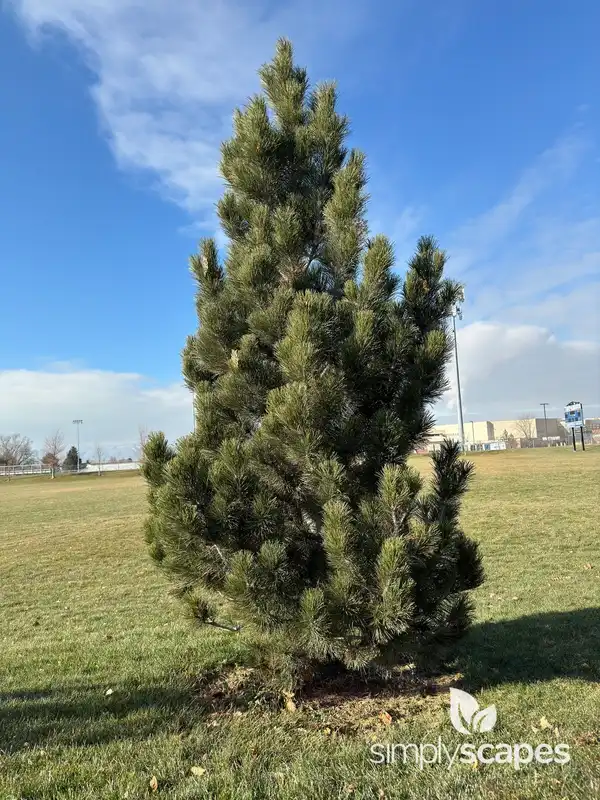
Lacebark Pine
Pinus bungeana
A slow-growing pine with spectacular exfoliating bark and multi-trunked habit.
- Plant Type
- Conifer Trees
- Width
- 20-35 Ft.
- Height
- 35 Ft.
- USDA hardiness zone
- 4 - 7
- Sun requirements
- Full Sun, Part Shade
- Water requirements
- Moist
- Design image count
- 1
Design images (1)

Bring your vision to life
The design images above are drag-and-drop ready — place this plant on a photo of your own yard and see it before you plant it.
Create design onlineAbout Lacebark Pine
Lacebark pine (Pinus bungeana) is a slow-growing evergreen tree with stiff, dark-green needles in bundles of three and a pyramidal to rounded crown. Its bark becomes a patchwork of green, cream, brown and silvery tones as it exfoliates with age. [The Morton Arboretum](https://mortonarb.org/plant-and-protect/trees-and-plants/lacebark-pine/) gives a mature range of 30–50 feet tall and 20–35 feet wide and notes its somewhat brittle branches.
## Placement and form
Give the tree room to develop its broad crown and plant it where the distinctive trunk can be seen. It works as a specimen in residential landscapes and parks, either trained to one trunk or allowed to develop a multi-stem form. Full sun is suitable; [NC State Extension](https://plants.ces.ncsu.edu/plants/pinus-bungeana/) notes that afternoon shade can help in hotter climates, where the pine may struggle.
## Soil and water
Use moist, well-drained soil. Plant slightly high where drainage is uncertain, since saturated ground is unsuitable. [NC State Extension](https://plants.ces.ncsu.edu/plants/pinus-bungeana/) reports drought tolerance once established; young trees need regular water as roots develop.
## Maintenance
Avoid sites exposed to heavy snow, ice or strong winds that can break branches. Remove dead or damaged limbs selectively; lower branches may be removed gradually to reveal more of the bark, but allow time for the trunk to mature before shaping.