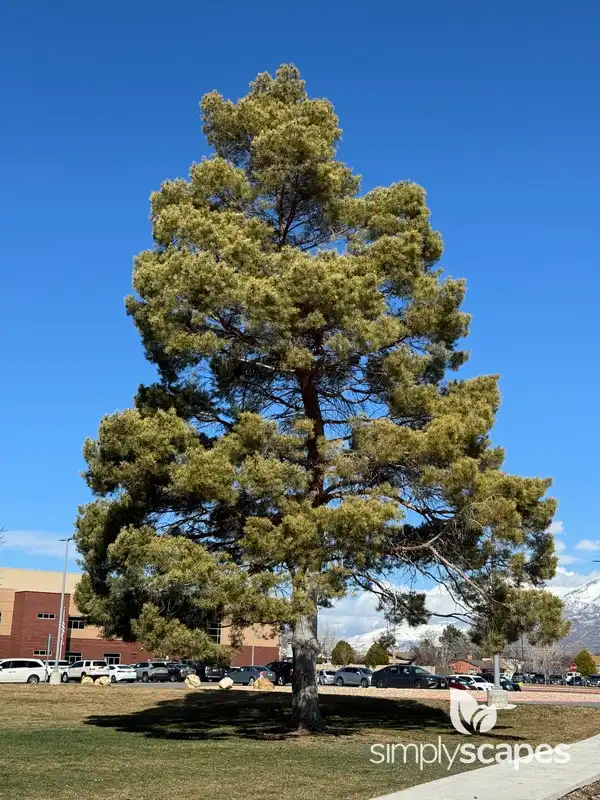
Ponderosa Pine
Pinus ponderosa
A majestic, long-lived giant with iconic vanilla-scented bark.
- Plant Type
- Conifer Trees
- Width
- 40 Ft.
- Height
- 100 Ft.
- USDA hardiness zone
- 3 - 8
- Sun requirements
- Full Sun
- Design image count
- 6
Design images (6)


Bring your vision to life
The design images above are drag-and-drop ready — place this plant on a photo of your own yard and see it before you plant it.
Create design onlineAbout Ponderosa Pine
Ponderosa pine is a large, long-lived evergreen of western North America, with a straight trunk, long needles, and thick bark that becomes cinnamon to orange-brown with age. Published mature-size estimates vary: North Carolina State Extension gives 60–125 feet tall by 25–30 feet wide, while a seedling nursery lists a broader 20–40-foot spread; the catalog’s 100-by-40-foot dimensions are retained within these documented ranges.
## Appearance
Needles are borne in bundles, usually of three, and the oval cones have prickly scales. Young trees are pyramidal; older trees develop a more irregular crown and distinctive plated bark.
## Growing Conditions
Provide full sun and deep, well-drained soil. The species grows across varied climates and soils, but performs best in suitable regional conditions. Oklahoma State notes drought resistance and salt tolerance; do not keep the root zone waterlogged.
## Maintenance
Allow generous room for the mature trunk and crown. Prune only to remove damaged branches or provide clearance, and avoid unnecessary cuts that may attract pests.
## New Zealand — FENZ Very high flammability
The [Fire and Emergency New Zealand plant directory](https://www.checkitsalright.nz/reduce-your-risk/low-flammability-plants) lists Pinus ponderosa / Ponderosa pine in its Very high flammability band (source entry 367). This entry appears in the separate environmental-weed warning table. FENZ links that table to New Zealand conservation concerns and encourages appropriate removal and disposal. This is a regional hazard/removal warning, not a planting recommendation or a worldwide weed designation. FENZ advises considering removal or relocation of moderate-to-high flammability vegetation where practical, following local rules; otherwise manage separation, lower branches and dead material.
This matches the printed unselected botanical identity. The source does not establish separate testing of every cultivar or regional form. Its bands describe flammability: higher means more flammable, unlike the numerical Idaho resistance scale. Plant condition, site and maintenance affect performance. Keep plants appropriately watered, remove dry material and maintain breaks in vegetation; low flammability is not fireproof. Keep other regional classifications separate.