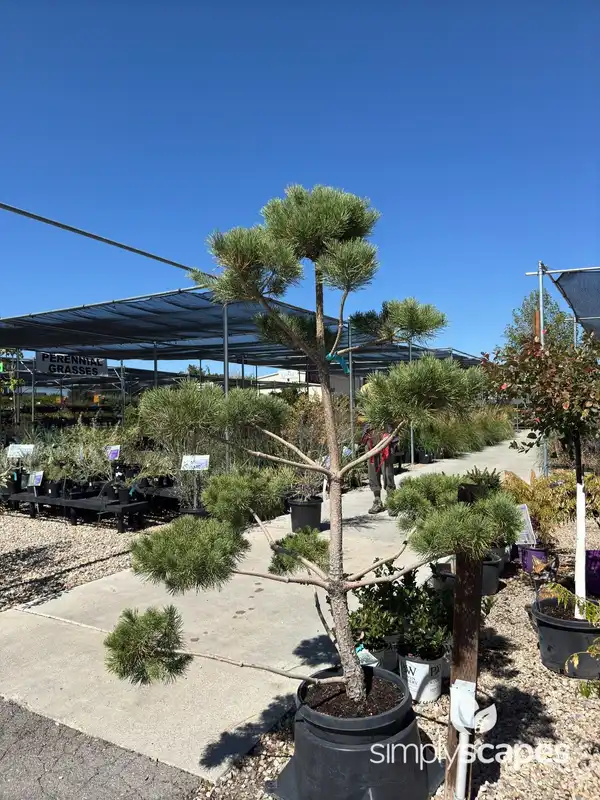
Scotch Pine
Pinus sylvestris
A fast-growing conifer with striking orange bark and blue-green needles.
- Plant Type
- Conifer Trees
- Width
- 25 Ft.
- Height
- 60 Ft.
- USDA hardiness zone
- 3 - 7
- Sun requirements
- Full Sun
- Design image count
- 1
Design images (1)

Bring your vision to life
The design images above are drag-and-drop ready — place this plant on a photo of your own yard and see it before you plant it.
Create design onlineAbout Scotch Pine
Scotch pine is a large evergreen conifer with twisted, gray-green needles in pairs and orange-brown bark on its upper trunk. Its crown is more regular when young and develops a picturesque, irregular outline as the tree matures. [Royal Horticultural Society](https://www.rhs.org.uk/plants/13141/pinus-sylvestris/details)
## Form and placement
The Morton Arboretum describes mature trees about 30–60 feet tall and 30–40 feet wide, with broad, irregular or pyramidal form. It grows in full sun and tolerates a range of well-drained soils, including acidic, alkaline, clay, loam, and sandy conditions. The Arboretum lists USDA zones 3–7 and moderate growth. Allow room for the mature crown rather than treating this species as a narrow screen.
## Seasonal interest
Its evergreen needles keep the tree green through winter. The orange upper bark and irregular mature branching add year-round character, and the species can serve as a specimen in a spacious landscape.
## Maintenance
The RHS says pruning is not required. Monitor for pine wilt, tip blight, Zimmerman pine moth, and other pests identified by the Morton Arboretum. The Arboretum advises against planting this species in the Midwest because of its pest and disease problems.
## New Zealand — FENZ Moderate/high flammability
The [Fire and Emergency New Zealand plant directory](https://www.checkitsalright.nz/reduce-your-risk/low-flammability-plants) lists Pinus sylvestris / Scots pine in its Moderate/high flammability band (source entry 369). This entry appears in the separate environmental-weed warning table. FENZ links that table to New Zealand conservation concerns and encourages appropriate removal and disposal. This is a regional hazard/removal warning, not a planting recommendation or a worldwide weed designation. FENZ advises considering removal or relocation of moderate-to-high flammability vegetation where practical, following local rules; otherwise manage separation, lower branches and dead material.
This matches the printed unselected botanical identity. The source does not establish separate testing of every cultivar or regional form. Its bands describe flammability: higher means more flammable, unlike the numerical Idaho resistance scale. Plant condition, site and maintenance affect performance. Keep plants appropriately watered, remove dry material and maintain breaks in vegetation; low flammability is not fireproof. Keep other regional classifications separate.