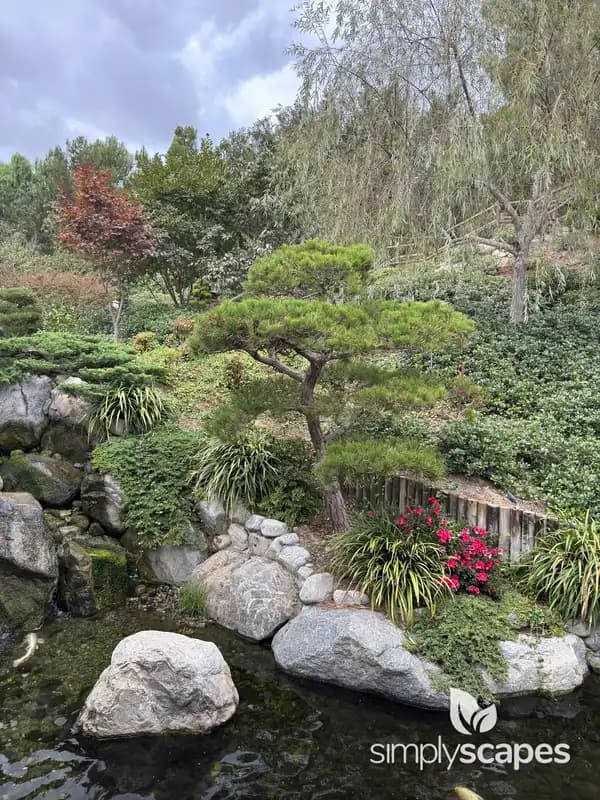
Japanese Black Pine Tree
Pinus thunbergii
The iconic Japanese black pine: a sculptural masterpiece for coastal gardens.
- Plant Type
- Conifer Trees
- Width
- 12-20 Ft.
- Height
- 20-60 Ft.
- USDA hardiness zone
- 5 - 8
- Sun requirements
- Full Sun
- Design image count
- 9
Design images (9)


Bring your vision to life
The design images above are drag-and-drop ready — place this plant on a photo of your own yard and see it before you plant it.
Create design onlineAbout Japanese Black Pine Tree
Japanese Black Pine (Pinus thunbergii) is an evergreen tree with a broad, irregular crown that changes as it ages. Young trees are broadly pyramidal; older trees develop a spreading, often asymmetrical outline with pendulous branches.
## Form and landscape use
North Carolina State Extension gives a mature range of 20–60 feet high and 12–20 feet wide, which updates the catalog’s broad labels while preserving its existing numeric size points within those ranges. Oregon State University describes the species as an evergreen conifer, 20–80 feet tall, with an irregular-to-pyramidal young form that spreads with age. [NC State Extension](https://plants.ces.ncsu.edu/plants/pinus-thunbergii/) and [Oregon State University](https://landscapeplants.oregonstate.edu/plants/pinus-thunbergii) provide species-level profiles.
## Growing conditions
Choose full sun and fertile, moist, well-drained soil. The species tolerates sand, heat, drought, and salt, making it suitable for exposed coastal sites where salt tolerance is useful.
## Maintenance
NC State notes that the tree is easy to grow and requires little maintenance; routine pruning is not required. Leave room for the mature spreading crown and remove only damaged branches or those that obstruct the site.