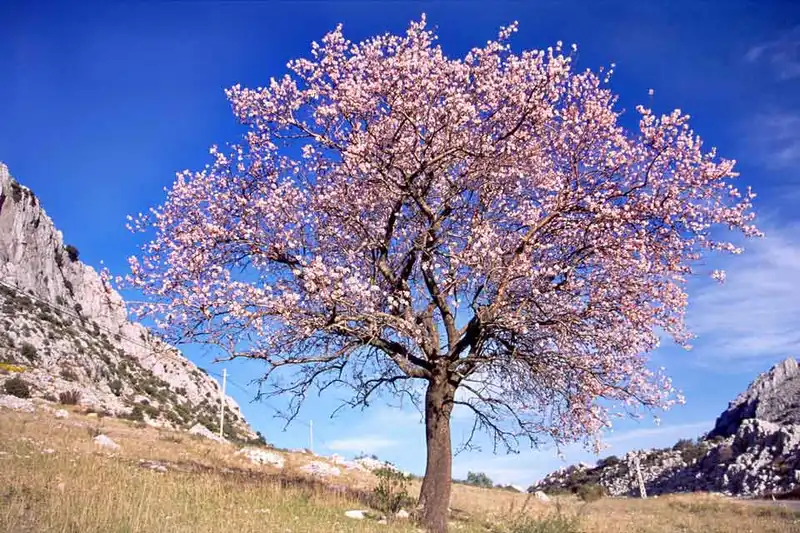
Almond Tree
Prunus dulcis
A beautiful spring-blooming tree producing nutritious, crunchy almonds.
- Plant Type
- Edible Plants
- Width
- 10-15 Ft.
- Height
- 26 Ft.
- USDA hardiness zone
- 7 - 9
- Sun requirements
- Full Sun
- Design image count
- 3
Design images (3)


Bring your vision to life
The design images above are drag-and-drop ready — place this plant on a photo of your own yard and see it before you plant it.
Create design onlineAbout Almond Tree
Almond (Prunus dulcis) is a deciduous stone-fruit tree grown for its edible kernel, which develops inside a pit and drying husk. Its flowers open in early spring and can be damaged by frost. Mature size, hardiness, shell type, and pollination requirements vary among cultivars and rootstocks.
## Site and pollination
Choose a full-sun, warm site with well-drained soil; a gentle slope helps cold air drain away from the blossoms. Many almond cultivars need a compatible pollinizer flowering at the same time, although some named cultivars are self-fertile. Pollinating insects, especially honeybees, move pollen between trees. Keep the soil drained and provide steady moisture while young trees establish and nuts develop.
## Maintenance
Form a strong framework with early pruning, then remove damaged or crowded branches while maintaining an open canopy. Harvest nuts when the husks dry and begin to split, then dry and store the kernels in airtight containers. For fruit production, confirm pollination compatibility and rootstock size with the selected cultivar before planting. [Utah State University Extension](https://extension.usu.edu/yardandgarden/research/almonds-in-the-home-garden) explains almond pollination, siting, rootstocks, and harvest; [Almond from North Carolina Extension](https://plants.ces.ncsu.edu/plants/prunus/common-name/almond/) describes the genus-level variation in size and flowers.