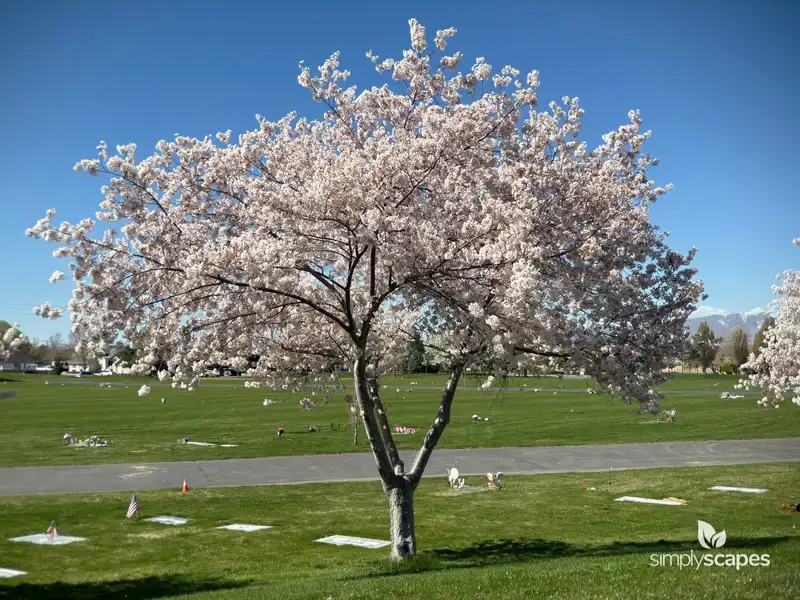
Flowering Cherry Tree (Prunus serrulata)
Prunus serrulata
Iconic spring bloomer with clouds of pink or white flowers.
- Plant Type
- Flowering Trees
- Width
- 15-25 Ft.
- Height
- 15-25 Ft.
- USDA hardiness zone
- 5 - 8
- Sun requirements
- Full Sun, Part Shade
- Design image count
- 11
Design images (11)


Bring your vision to life
The design images above are drag-and-drop ready — place this plant on a photo of your own yard and see it before you plant it.
Create design onlineAbout Flowering Cherry Tree (Prunus serrulata)
Japanese flowering cherry is a deciduous ornamental tree whose mature size, crown shape, and flower form vary among cultivars. Depending on the selection, spring flowers may be white or pink and single, semi-double, or double.
## Appearance
The species has serrated leaves, often bronze as they emerge and dark green through summer, with yellow or red autumn color. North Carolina State Extension gives a typical size of 15–25 feet tall and equally wide, while noting substantial variation among cultivars. [North Carolina State Extension](https://plants.ces.ncsu.edu/plants/prunus-serrulata/common-name/japanese-cherry/) [Royal Horticultural Society](https://www.rhs.org.uk/plants/14026/prunus-serrulata-d/details)
## Growing Conditions
Plant in full sun in moist, well-drained loamy soil. Good air circulation helps keep foliage healthy, and a site with room for the crown allows the tree to develop its natural outline.
## Maintenance
Water during establishment and in prolonged dry weather. Remove damaged or crossing branches as needed, and clear fallen leaves and fruit where they collect around paths or lawn. Cultivar-specific size and flowering details should guide placement when a named selection is chosen.