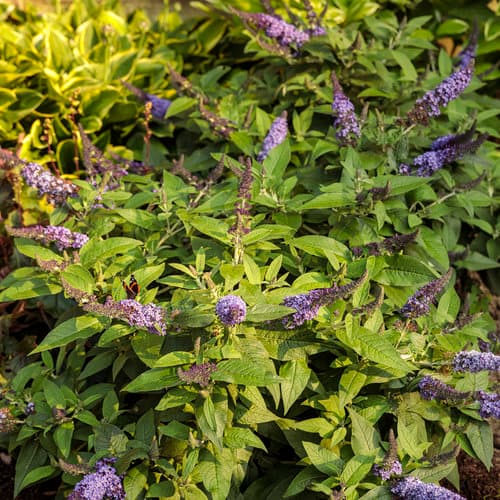
Pugster Blue® Butterfly Bush
Buddleia x 'SMNBDBT' USPP28794, Can PP6486
Full-sized true-blue flowers on a compact, winter-hardy dwarf plant.
- Plant Type
- Shrubs & Roses
- Width
- 2-3 Ft.
- Height
- 2 Ft.
- USDA hardiness zone
- 5 - 9
- Sun requirements
- Full Sun
- Water requirements
- Low, Medium
- Plant developer
- Proven Winners
Bring your vision to life
The design images above are drag-and-drop ready — place this plant on a photo of your own yard and see it before you plant it.
Create design onlineAbout Pugster Blue® Butterfly Bush
Pugster Blue® is a compact hybrid butterfly bush with full-sized true-blue flowers marked by small yellow-orange eyes. Proven Winners describes a plant about 2 feet tall and 2–3 feet wide, flowering from early summer until frost. Its thick, sturdy stems are bred for improved winter survival compared with other dwarf butterfly bushes.
## Form and placement
The small rounded shrub fits sunny borders and containers where its blue flowers can be seen at close range. The breeder lists full sun, well-drained soil, USDA zones 5–9, fragrant flowers, and visits by bees, butterflies, and hummingbirds. It also lists deer and rabbit resistance; wildlife may still browse when food is scarce.
## Growing conditions
Plant in a sunny location with good drainage. Water well during establishment and through extended dry weather. Proven Winners marks this cultivar drought tolerant, but that should not be read as no supplemental water, especially in the first growing seasons. In zone 5 and colder, the breeder advises against fall planting and pruning; leave stems over winter and assess live growth in spring.
Sources: [Proven Winners Pugster Blue®](https://www.provenwinners.com/plants/buddleia/pugster-blue-butterfly-bush-buddleia-x).
## Maintenance
Allow roughly 2–3 feet for the shrub's width. Do not prune in fall in cold climates; in spring, remove only dead or damaged wood after new growth begins. Deadheading is not required for rebloom according to the breeder. Local winter drainage and exposure can affect survival.