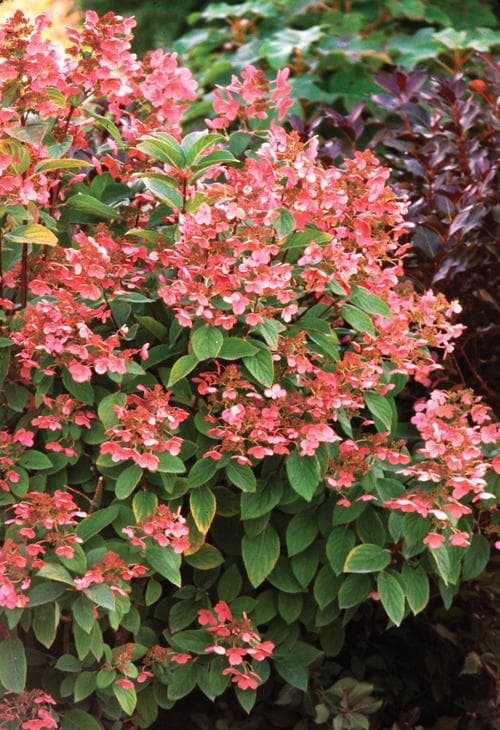
Quick Fire® Panicle Hydrangea
Hydrangea paniculata 'Bulk' USPP16812, Can PP3398
The earliest blooming panicle hydrangea with stunning white-to-rosy-pink flowers.
- Plant Type
- Shrubs & Roses
- Width
- 6-8 Ft.
- Height
- 6-8 Ft.
- USDA hardiness zone
- 3 - 9
- Sun requirements
- Full Sun, Part Shade
- Water requirements
- Moderate
- Plant developer
- Proven Winners
- Design image count
- 4
Design images (4)
-7735-D.webp&w=3840&q=75)
.webp&w=3840&q=75)
-Medium.webp&w=3840&q=75)
-7735-D-Potted.webp&w=3840&q=75)
Bring your vision to life
The design images above are drag-and-drop ready — place this plant on a photo of your own yard and see it before you plant it.
Create design onlineAbout Quick Fire® Panicle Hydrangea
Quick Fire® is an early-flowering panicle hydrangea with conical clusters that open white, turn pink, and deepen to red-pink as the season advances. This vigorous, upright cultivar reaches about 6–8 feet in both height and spread, making it useful in a shrub border, hedge, or large container.
## Flowers and placement
Proven Winners identifies the selection as Hydrangea paniculata ‘Bulk’ (U.S. PP16,812; Canadian PP3,398), hardy in zones 3–9. It blooms earlier than other panicle hydrangeas, and flower color is not changed by soil pH. The breeder recommends full sun to part sun and lists it for borders, containers, cutting, and mass planting. See the [Proven Winners profile](https://www.provenwinnerscolorchoice.com/plant/quick-fire-hardy-hydrangea/) and [U.S. patent record](https://patents.google.com/patent/USPP16812P2/en).
## Growing conditions
Provide well-drained soil with regular moisture, especially while the shrub establishes. NC State Extension notes that Hydrangea paniculata flowers on current-season wood and tolerates more sun than many hydrangeas; its [species guide](https://plants.ces.ncsu.edu/plants/hydrangea-paniculata/) offers additional siting guidance.
## Maintenance
Prune in late winter or early spring, before new growth, to shape the plant and remove weak stems. Water during prolonged dry weather; a mulch layer helps keep the shallow root zone evenly moist.