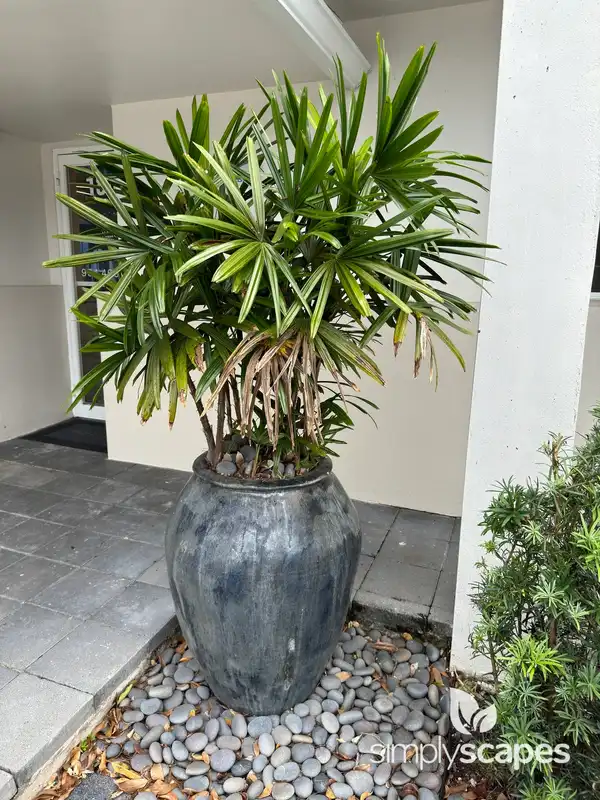
Broadleaf Lady Palm Tree
Rhapis excelsa
A slow-growing evergreen palm with bamboo-like canes and broad, fan-shaped leaves for shaded interiors or gardens.
- Plant Type
- House Plants & Tropicals
- Width
- 6–15 ft
- Height
- 4–12 ft
- USDA hardiness zone
- 9 - 11
- Sun requirements
- Part Shade, Full Shade
- Water requirements
- Medium
- Design image count
- 17
Design images (17)


Bring your vision to life
The design images above are drag-and-drop ready — place this plant on a photo of your own yard and see it before you plant it.
Create design onlineAbout Broadleaf Lady Palm Tree
The broadleaf lady palm (Rhapis excelsa) is a slow-growing evergreen palm with clusters of slender, fiber-covered canes. Its glossy fan leaves are divided into broad, blunt segments, creating a full texture for shaded gardens and interiors.
This species is native to wet forests of southern China and Vietnam, where it grows beneath taller trees. North Carolina State Extension lists it for indoor use and shaded landscape sites, with mature dimensions of about 4–12 feet tall and 6–15 feet wide. It prefers well-drained soil, regular moisture, and partial to full shade; its slow growth makes it manageable as a screen or long-lived container specimen. Small yellow flowers and pale fruit may appear among the foliage, although flowering is not the main ornamental feature. [NC State Extension](https://plants.ces.ncsu.edu/plants/rhapis-excelsa/) gives species-specific care and size guidance, while the [Royal Horticultural Society](https://www.rhs.org.uk/plants/14466/rhapis-excelsa/details) describes its fan-like leaves and sheltered, shaded growing conditions.
## Maintenance
Keep the root zone evenly moist but well drained, and reduce watering during cooler months. Indoors, provide bright indirect light or light shade and protect the leaves from hot direct sun. Outdoors, choose a sheltered position away from drying winds; trim only damaged foliage.