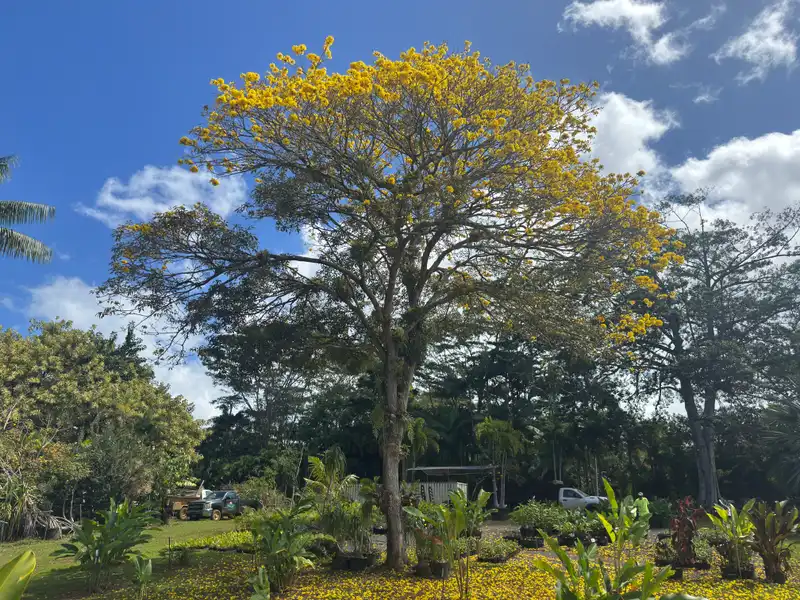
Primavera Gold Tree
Roseodendron donnell-smithii
A large tropical tree with bright yellow flowers before seasonal rains.
- Plant Type
- Flowering Trees
- Width
- Broad crown; about 35–40 ft
- Height
- Up to about 80 ft
- USDA hardiness zone
- 10 - 12
- Sun requirements
- Full Sun
- Water requirements
- Medium
- Design image count
- 1
Design images (1)

Bring your vision to life
The design images above are drag-and-drop ready — place this plant on a photo of your own yard and see it before you plant it.
Create design onlineAbout Primavera Gold Tree
Primavera Gold Tree, *Roseodendron donnell-smithii*, is a large tropical tree with a drought-deciduous habit. Its bright-yellow, bell-shaped flowers open in loose clusters, often together just before the rainy season. [National Tropical Botanical Garden](https://ntbg.org/database/plants/detail/roseodendron-donnell_smithii) and [Kew](https://powo.science.kew.org/taxon/urn:lsid:ipni.org:names:222518-2/general-information) document the species and its tropical range.
## Form and planting
Native from southern Mexico to Venezuela, Primavera grows in seasonally dry tropical regions. It develops a tall, straight trunk before branching and may reach about 25 metres, so reserve ample space above and around it. Use it where a large flowering tree can mature without crowding buildings, paths or overhead lines.
## Care
Choose a warm, open site and provide steady moisture while a young tree establishes. Its seasonal leaf loss is part of its adaptation to dry periods; do not mistake that seasonal response for a need to keep mature soil constantly wet. Structural pruning is best done while the tree is young, with later work limited to dead, damaged or crossing branches. The yellow bloom is the main seasonal display; flowering time follows local rainfall rather than a fixed calendar month.
## Maintenance
Inspect the canopy after storms and remove damaged branches with clean cuts. Keep the trunk flare visible and avoid topping, which spoils the tree’s naturally tall form.