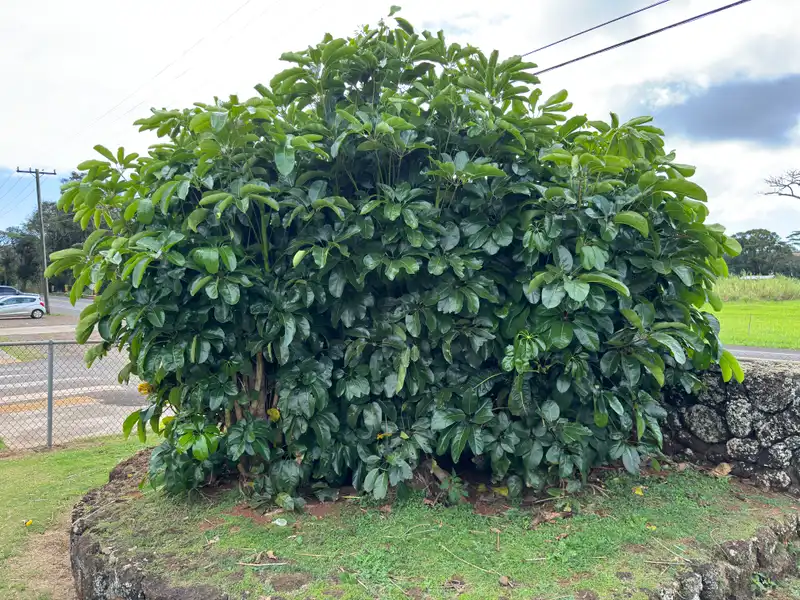
Umbrella Tree
Schefflera actinophylla
A lush tropical tree with iconic umbrella-like foliage.
- Plant Type
- House Plants & Tropicals
- Width
- 24–36 In.
- Height
- 5-10 Ft. In.doors 20-40 Ft. outdoors
- USDA hardiness zone
- 10 - 12
- Sun requirements
- Full Sun, Part Shade
- Water requirements
- Average
- Design image count
- 5
Design images (5)


Bring your vision to life
The design images above are drag-and-drop ready — place this plant on a photo of your own yard and see it before you plant it.
Create design onlineAbout Umbrella Tree
Umbrella tree, also called octopus tree or Australian ivy palm, is an evergreen tropical shrub or multi-stemmed tree with glossy palmate leaves. North Carolina State Extension reports heights up to 40 feet outdoors and a usual indoor range of 4–6 feet tall and 3–6 feet wide; flowering racemes may reach several feet long. ([NC State Extension Plant Toolbox](https://plants.ces.ncsu.edu/plants/heptapleurum-actinophyllum/))
## Garden Use
Grow it as a foliage-focused houseplant in a bright room with high humidity, or use a container outdoors in a protected tropical setting. Mature outdoor trees offer a dramatic canopy of umbrella-like leaflets and summer flower clusters that attract birds and butterflies. Keep this large species away from tight paths and small rooms unless it will be pruned to fit.
## Growing Conditions
Provide bright light and rich, moist, well-drained soil. The plant tolerates full sun or partial shade outdoors, though protection from hot afternoon sun helps prevent stress. Water regularly with rainwater or filtered water, and avoid soggy soil. In cooler climates, bring outdoor container plants inside before winter; the species is suited to warm zones.
## Maintenance
Prune to control size, remove damaged stems and maintain a safe clearance under outdoor branches. Inspect for aphids, mealybugs, spider mites, thrips and scale; keep soil from becoming waterlogged to reduce rot. All parts can be toxic if eaten, and sap may irritate skin, so keep the plant away from pets and children and use care when pruning.