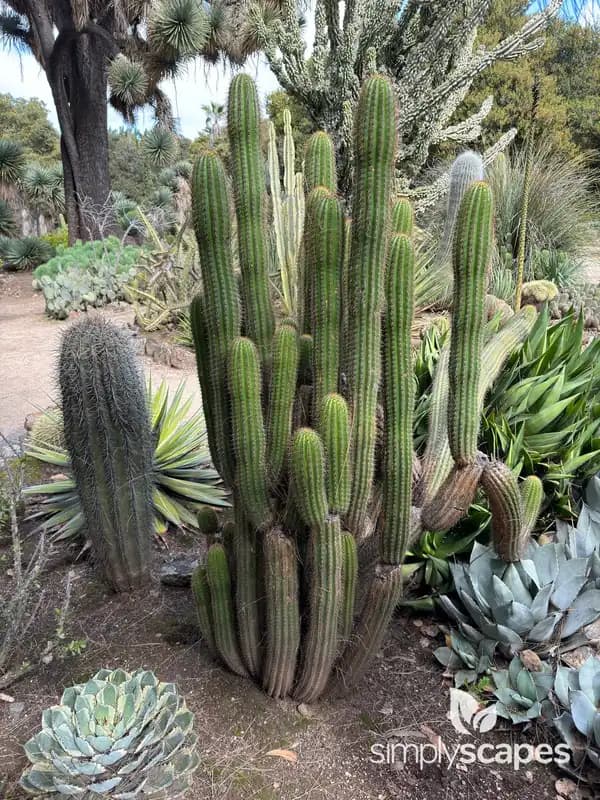
Organ Pipe Cactus
Stenocereus thurberi
A slow-growing Sonoran columnar cactus with night-opening flowers and traditional edible fruit.
- Plant Type
- Succulents
- Width
- 11-15 Ft.
- Height
- 15-25 Ft.
- USDA hardiness zone
- 9 - 12
- Sun requirements
- Full Sun, Part Shade
- Design image count
- 8
Design images (8)


Bring your vision to life
The design images above are drag-and-drop ready — place this plant on a photo of your own yard and see it before you plant it.
Create design onlineAbout Organ Pipe Cactus
Organ Pipe Cactus (Stenocereus thurberi) is a slow-growing columnar cactus of the Sonoran Desert, where it favors warm, rocky, south-facing slopes. Its creamy-white flowers open at night in May and June, and its red, seed-filled fruit ripens before the summer rains. The [National Park Service](https://home.nps.gov/orpi/learn/nature/organ-pipe-cactus.htm) describes its pollination and harvest season; the [University of Arizona Campus Arboretum](https://arboretum.arizona.edu/snyder-preserve-stenocereus-thurberi) also documents its desert wildlife value.
## Growth and Flowering
This species grows slowly and is vulnerable to severe frost, especially while young. Established plants develop tall ribbed stems that store water and shade themselves with spines. NPS reports that first flowering may not occur until a plant is about 35 years old, with flowers opening after dark and closing by midmorning. The flower season varies with winter rain timing, and NPS describes large plants reaching roughly 10–20 feet.
## Fruit and Habitat
The fruit ripens before summer rains and opens to reveal red pulp with seeds. NPS documents its traditional harvest for food and preserves, syrup, and wine. The plant is native to the Sonoran Desert and contributes nectar and fruit to desert wildlife. Warm rock and south-facing slopes help buffer cold nights in its northern range.
## Maintenance
Grow only in warm, frost-protected settings with excellent drainage and ample sunlight; cold injury can scar stems or kill the plant. Protect young cacti from frost, trampling, and washouts while they establish. Avoid regular irrigation that leaves the root zone wet.