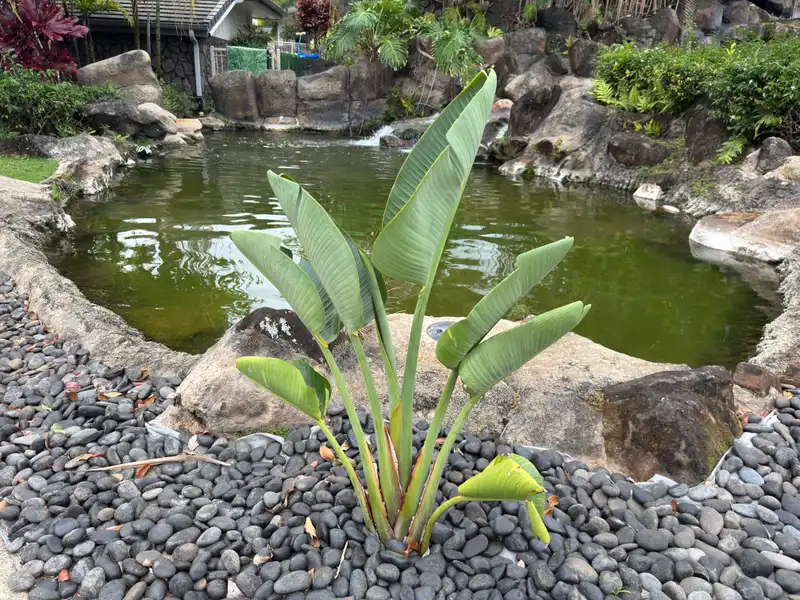
White Bird of Paradise
Strelitzia nicolai
A towering clumping tropical evergreen with huge gray-green leaves and white-and-blue birdlike flowers.
- Plant Type
- House Plants & Tropicals
- Width
- 6–10 ft
- Height
- 20–30 ft
- USDA hardiness zone
- 10 - 11
- Sun requirements
- Part Shade
- Water requirements
- Medium
- Design image count
- 1
Design images (1)

Bring your vision to life
The design images above are drag-and-drop ready — place this plant on a photo of your own yard and see it before you plant it.
Create design onlineAbout White Bird of Paradise
White bird of paradise is a large, clumping tropical evergreen with immense gray-green leaves and striking white-and-blue flowers. It suits a warm, sheltered site where it has room to spread; in cool climates it is best treated as a substantial indoor or conservatory plant. [NC State Extension](https://plants.ces.ncsu.edu/plants/strelitzia-nicolai/common-name/white-bird-of-paradise/)
## Form and flowers
Native to southern Africa, Strelitzia nicolai grows from clumping stems and can form a tall, architectural screen. Its large paddle-shaped leaves sit above boat-shaped dark bracts; the flowers have white sepals and blue petals. The existing mature-size fields describe the large outdoor form; growth indoors depends on light, root space, and conditions.
## Growing conditions
Give it bright indirect light or partial shade and a warm, sheltered position. Use fertile, well-drained soil; water when the upper soil begins to dry, then allow excess water to drain. Established plants tolerate some dry periods, while regular moisture supports active growth. Protect broad leaves from strong winds, which can split them. NC State lists clay, loam, and sandy soils and USDA zones 10a–11b; cold-climate gardeners can grow it in a container and overwinter it indoors.
## Placement
Use it as a specimen, screen, or large container plant where its spread and vigorous roots have adequate clearance from paving and structures. Its flowers provide nectar used by birds in its native range.
## Maintenance
Remove damaged leaves at their base with clean tools and keep the crown clear of persistently wet debris. Repot container plants when roots have filled the pot, using a free-draining mix. Allow the surface to dry slightly between waterings, and reduce watering when growth slows.