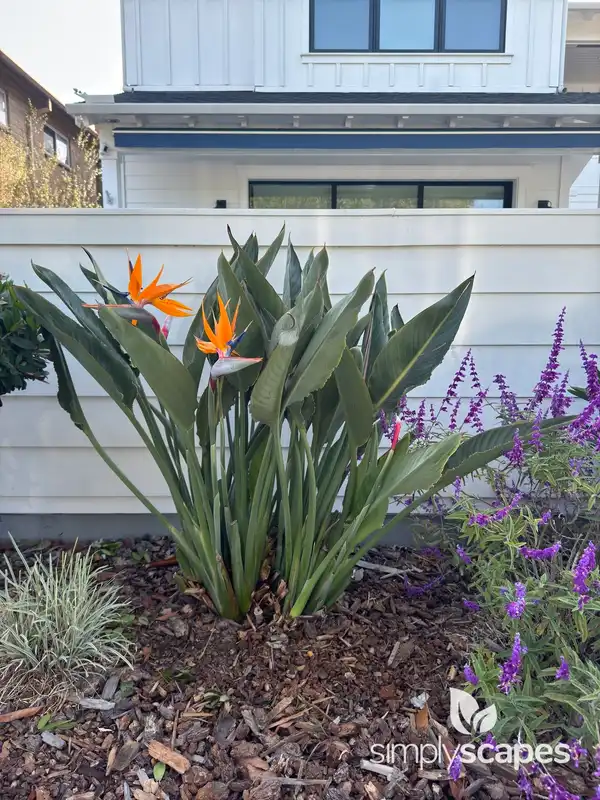
Bird Of Paradise Plant
Strelitzia reginae
A clump-forming evergreen with upright gray-green leaves and orange-and-blue bird-shaped flowers.
- Plant Type
- House Plants & Tropicals
- Width
- 3-5 Ft.
- Height
- 4-6 Ft.
- USDA hardiness zone
- 9 - 11
- Sun requirements
- Full Sun, Part Shade
- Water requirements
- Medium
- Design image count
- 9
Design images (9)


Bring your vision to life
The design images above are drag-and-drop ready — place this plant on a photo of your own yard and see it before you plant it.
Create design onlineAbout Bird Of Paradise Plant
Bird of paradise is a clump-forming evergreen perennial with upright gray-green leaves and distinctive orange-and-blue flowers. Its architectural form works in warm gardens and in bright indoor spaces where it can be given room and humidity. [NC State Extension](https://plants.ces.ncsu.edu/plants/strelitzia-reginae/common-name/bird-of-paradise/)
## Form and flowers
The South African species grows from rhizomes, producing upright leaves and vivid flowers shaped like a bird’s head. The orange sepals and blue petals rise from a boat-shaped bract. Plants flower intermittently in warm conditions; published garden observations range from fall through winter, while extension guidance notes flowers can appear through much of the year.
## Growing conditions
Provide full sun to partial shade outdoors in warm climates, or bright indirect light indoors. Use fertile, well-drained loamy soil and water during active growth, allowing the surface to dry somewhat between waterings. Keep it drier in winter and provide good air movement. It is commonly grown as a container or houseplant outside tropical climates. The Chicago Botanic Garden lists USDA zones 9–11; colder locations require protection or indoor wintering.
## Placement
Use as a specimen, patio, or container plant. Its flowers attract birds in suitable regions. Keep it away from pets that may chew the plant, since NC State lists it as toxic to cats, dogs, and horses.
## Maintenance
Remove spent flower stalks and damaged leaves at their base. Divide crowded clumps only when needed, as established plants flower best when allowed to settle. During winter indoors, reduce watering and watch for dry-air pests.