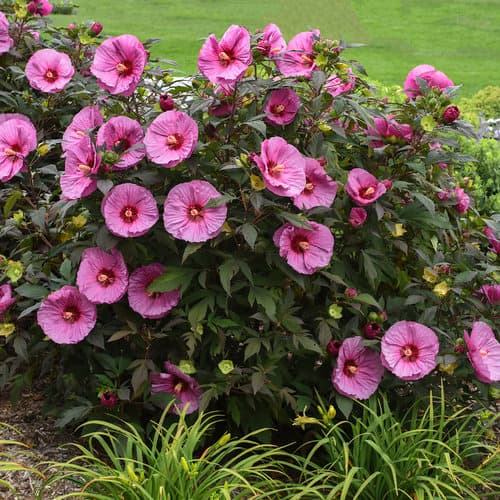
Summerific® Berry Awesome™ Rose Mallow
Hibiscus hybrid 'Berry Awesome' USPP27936, Can PP5647
Massive dinner-plate blooms on a compact, midnight-green shrub.
- Plant Type
- Shrubs & Roses
- Width
- 4.5–5 ft.
- Height
- 3.5–4 ft.
- USDA hardiness zone
- 4 - 9
- Sun requirements
- Full Sun, Part Shade, Part Sun
- Water requirements
- Moderate, Average, Consistent moisture
- Plant developer
- Proven Winners
- Design image count
- 2
Design images (2)
-Berry-Awesome-10557-K.webp&w=3840&q=75)
-Berry-Awesome.webp&w=3840&q=75)
Bring your vision to life
The design images above are drag-and-drop ready — place this plant on a photo of your own yard and see it before you plant it.
Create design onlineAbout Summerific® Berry Awesome™ Rose Mallow
Summerific® ‘Berry Awesome’ carries large, ruffled lavender-pink flowers with cherry-red eyes above dark, midnight-green foliage. Its compact, shrub-like form reaches about 3½–4 feet tall and 4½–5 feet wide, filling sunny borders with summer flowers and useful fall interest. [Walters Gardens](https://www.waltersgardens.com/variety.php?ID=HIBBA) and [Proven Winners](https://www.provenwinners.com/plants/hibiscus/summerific-berry-awesome-rose-mallow-hibiscus-hybrid) document the named cultivar and its garden dimensions.
## Flowers and form
The 7–8 in. blooms have layered lavender-pink petals and a bright cherry-red eye; deep green, purple-tinged leaves make a substantial backdrop. This Summerific® cultivar is a tall perennial for USDA zones 4–9, reaching roughly 1.1–1.2 m in height and 1.4–1.5 m across. Its flowers attract bees and hummingbirds, and Walters Gardens also notes butterflies.
## Site and water
Give the plant part sun to full sun and moist, well-drained soil. Average water is suitable, but regular moisture supports larger flowers and fuller leaves. The selection is listed for bog conditions, borders, and focal plantings. Its late-season display pairs well with grasses and other perennials that carry texture into fall.
## Maintenance
Deadheading can improve appearance but is unnecessary for continued flowering. Mulch first-year plantings in winter, leave stems through fall, and cut back remaining growth in spring before new shoots appear. It is naturally late to emerge, so allow time for growth before disturbing the crown. Japanese beetles may feed on the foliage. U.S. plant patent PP27936 issued April 25, 2017.