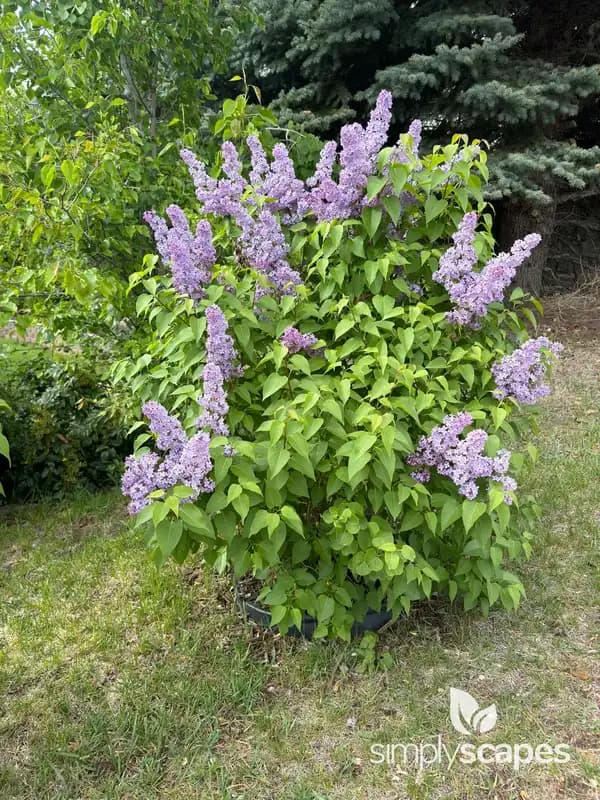
Common Lilac
Syringa vulgaris
A timeless spring favorite with intoxicatingly fragrant purple blooms.
- Plant Type
- Flowering Trees
- Width
- 8-12 Ft.
- Height
- 12-16 Ft.
- USDA hardiness zone
- 3 - 7
- Sun requirements
- Full Sun
- Design image count
- 26
Design images (26)


Bring your vision to life
The design images above are drag-and-drop ready — place this plant on a photo of your own yard and see it before you plant it.
Create design onlineAbout Common Lilac
Common lilac is a large, upright, multi-stemmed shrub with heart-shaped, dark-green leaves and fragrant purple flower panicles in spring. It grows well in full sun and suits a spacious border, specimen planting, flowering hedge, or screen; its blooms also make useful cut flowers.
## Site and growth
The University of Minnesota profile places this lilac in USDA zones 3–7 and describes typical mature dimensions of 8–15 feet tall and 6–12 feet wide. Allow room for its branching, suckering habit and provide airflow around the foliage. Plant in moist, well-drained soil and avoid sites where water pools.
## Seasonal interest
Flowers usually appear in May, bringing a strong fragrance and purple color to the spring garden. The shrub’s leafy structure remains useful after bloom, and the flowers attract birds, butterflies, and other pollinators.
## Maintenance
Prune just after flowering so next year’s buds remain intact. Remove unwanted basal suckers when they appear, mulch lightly over the shallow root zone, and avoid piling mulch against stems. Good spacing and air circulation help limit powdery mildew. [University of Minnesota Extension](https://trees.umn.edu/common-lilac-syringa-vulgaris).