American Arborvitae
Thuja occidentalis
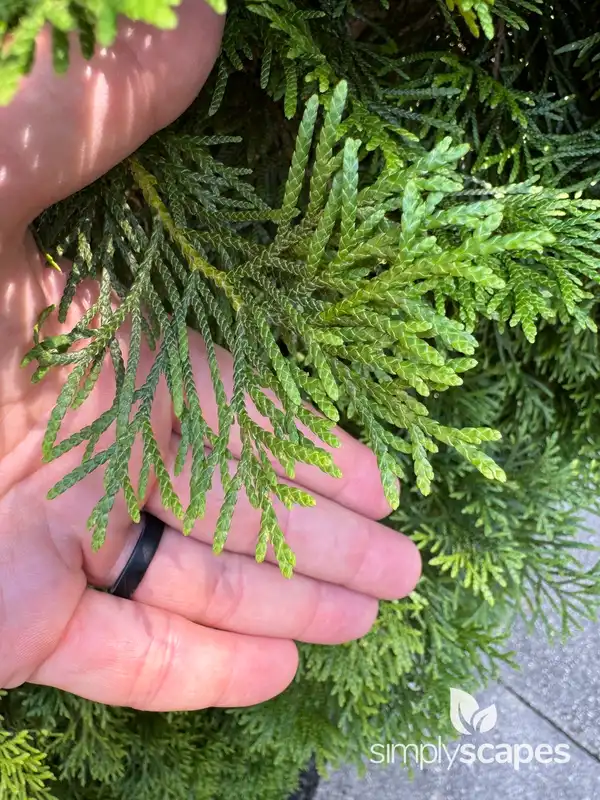
Dense, pyramidal American arborvitae with flattened sprays of scale-like foliage.
- Plant Type
- Conifer Trees
- Width
- 5-10 Ft.
- Height
- 25-40 Ft.
- USDA hardiness zone
- 3 - 7
- Sun requirements
- Full Sun, Part Shade
- Design image count
- 11
Design images (11)


Bring your vision to life
The design images above are drag-and-drop ready — place this plant on a photo of your own yard and see it before you plant it.
Create design onlineAbout American Arborvitae
American arborvitae is a dense, pyramidal evergreen tree with flattened sprays of scale-like foliage. It provides year-round structure, and its size and form can vary substantially among named cultivars. [Iowa State University Extension](https://yardandgarden.extension.iastate.edu/article/2004/6-25-2004/arborvitae.html) describes its landscape use and growing conditions.
## Site and soil
Plant in full sun to partial shade and moist, well-drained, fertile soil. Heavy shade can leave growth loose and open. The foliage may dry and turn brown in late winter or early spring when exposed to winter sun and wind, and deer may browse it. [The USDA NRCS plant guide](https://plants.usda.gov/DocumentLibrary/plantguide/pdf/cs_thoc2.pdf) also describes the species as an evergreen shrub or tree and notes that it grows in a wide variety of soils in cultivation.
## Garden use
Use upright forms for hedges, screens, shelter plantings, or as specimen plants. Globe-shaped and dwarf cultivars suit foundation plantings, landscape beds, or rock gardens; select cultivars by their own dimensions and habit rather than assuming the species profile fits every selection. Oregon State University’s [Thuja occidentalis profile](https://landscapeplants.oregonstate.edu/plants/thuja-occidentalis) details the species’ forms and its use in hedges.
## Maintenance
Keep soil moist and well-drained, especially while establishing a new planting. Monitor for winter drying and browsing where deer are present, and allow room for the mature form.