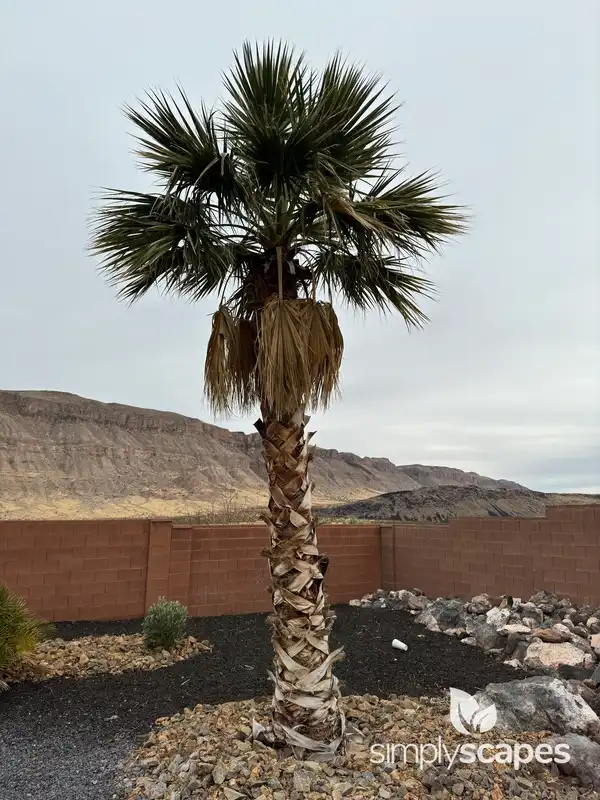
Mexican Fan Palm Tree
Washingtonia robusta
A fast-growing, iconic skyscraper palm for grand landscapes.
- Plant Type
- House Plants & Tropicals
- Width
- 10-15 Ft.
- Height
- 80-100 Ft.
- USDA hardiness zone
- 9 - 11
- Sun requirements
- Full Sun, Part Shade
- Water requirements
- Moist
- Design image count
- 21
Design images (21)


Bring your vision to life
The design images above are drag-and-drop ready — place this plant on a photo of your own yard and see it before you plant it.
Create design onlineAbout Mexican Fan Palm Tree
Mexican fan palm is a tall, fast-growing palm with a narrow trunk and a rounded crown of fan-shaped leaves. Its mature scale suits large open landscapes more than small residential yards. [NC State Extension](https://plants.ces.ncsu.edu/plants/washingtonia-robusta/)
### Placement
Choose a sunny site with ample vertical clearance and well-drained soil. This palm is used in coastal plantings, large lawns, parking areas, and as a street tree; it can also suit rain, arid, or tropical gardens where its climate needs are met. [UF/IFAS](https://ask.ifas.ufl.edu/publication/EP020)
### Seasonal interest
Long flower clusters rise among the leaves in spring, followed by small black fruits in summer. Young palms can retain a skirt of old leaves, while mature trees may shed them naturally. [UF/IFAS](https://ask.ifas.ufl.edu/publication/ST670)
## Maintenance
Keep the root ball from drying completely during establishment and provide good drainage. Remove fully dead leaves promptly to avoid a persistent dry skirt. Tall specimens need careful siting because this species can be more vulnerable to severe storm damage than some other palms.
## San Luis Obispo County source condition
The [county’s January 2014 plant list](https://www.slocounty.ca.gov/departments/planning-building/forms-documents/environmental-forms-and-documents/plants-information/county-approved-plant-list) assigns F3 with an explicit condition: retained dead fronds create a fire hazard. F3 is its transitional category for plants that grow back after fire, rather than a promise that a palm will not burn. Remove dead fronds and prevent an accumulation of dry leaf skirts. The county also requires suitable soil moisture, separated planting groups, removal of dead material and prevention of ground-to-canopy fuel connections.